

IPC Standards in Electronics Manufacturing: The Way to Ensure Quality and Reliability
Today's electronics manufacturing processes utilize complex components and methods that require high precision and quality to keep pace with rapidly advancing technology. The success of these processes depends not only on using the right materials and techniques, but also on adhering to internationally recognized standards. Among these standards, the most important are the IPC standards, which are widely used in electronics manufacturing.
IPC (Institute for Printed Circuits) is a non-profit organization that establishes a set of globally accepted standards for printed circuit board (PCB) and electronic assembly technologies. IPC standards help prevent errors, reduce costs, and extend product life by improving manufacturing quality and reliability.
In this article, we will examine in detail the importance and scope of IPC standards in electronic production and the technical advantages they provide in terms of electronic engineering.
Scope of IPC Standards
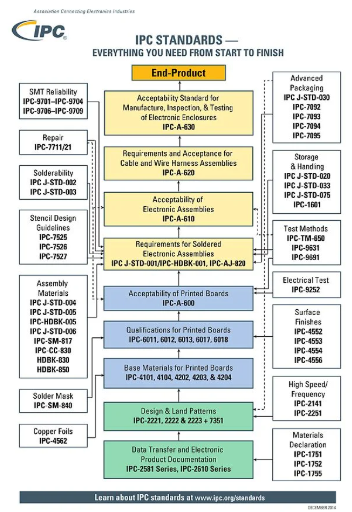
IPC standards encompass guidelines applied throughout the design, production, testing, and delivery of electronic devices to end users. These standards are particularly critical for ensuring the quality, reliability, and longevity of PCBs. The main areas covered by IPC include:
-
PCB Design: IPC standards regulate the factors that must be considered during the design phase of circuit boards. This includes parameters such as minimum track widths, component layouts, and signal integrity.
-
PCB Fabrication: Details such as the selection of materials to be used in board production, production tolerances, hole diameters, and conductor track thicknesses are determined by IPC standards. The IPC-6012 standard is one of the most important standards used specifically for layered circuit boards.
-
Electronic Assembly: Processes such as soldering methods, assembly accuracy, and the quality of solder joints during the assembly of electronic components onto boards are defined by standards such as IPC-A-610 and IPC-J-STD-001.
-
Testing and Verification: Tests performed to verify manufactured circuit boards and assembly processes are also conducted according to IPC standards. IPC-TM-650 is an important standard that regulates test methods.
-
Materials Standards: The properties and acceptability of the materials used are determined by standards such as IPC-4101. These standards, in particular, guarantee the electrical and mechanical performance of the materials.

Advantages of IPC Standards in Electronics Manufacturing
1. Production Quality
Manufacturing in accordance with IPC standards guarantees high quality. These standards specify minimum requirements at every stage of the entire production process. Errors in PCB manufacturing and assembly can shorten product lifespan and lead to significant costs. IPC standards help prevent these errors and increase the repeatability of the production process.
2. Product Reliability
The reliability of electronic devices is crucial, especially in critical fields such as automotive, defense, aerospace, and medical. Circuit boards manufactured in accordance with IPC standards can maintain their performance even in harsh environmental conditions. For example, IPC-6012 and IPC-A-610 standards are widely used in industries requiring high reliability.
3. Design Optimization
Design standards like IPC-2221 and IPC-2222 help engineers design printed circuit boards for the most efficient and reliable design. Critical parameters such as high-speed signal transmission, thermal management, and electromagnetic compatibility (EMC) can be optimized based on these standards. This helps reduce costs and minimize design errors while improving overall circuit board performance.
4. Faster Production Processes
IPC standards ensure a common language is used throughout the supply chain. This facilitates better communication between manufacturers, designers, and suppliers, minimizing potential misunderstandings. This speeds up production processes and shortens production cycles. Standards like IPC-7351, in particular, streamline design processes by providing component layout guidelines.
5. Global Compliance and Legal Requirements
IPC standards are among the most widely accepted standards in electronics manufacturing processes worldwide. This means IPC-compliant products are readily accepted in global markets and have a greater chance of complying with local regulatory requirements.
Technical Details of IPC Standards
IPC-A-610: Acceptance Criteria for Electronic Assembly
IPC-A-610 is one of the most widely used standards for quality control in electronic board assembly. This standard specifies acceptance criteria to be considered during visual inspection of assembly operations. The standard covers key aspects such as visual assessment of solder joints, component placement accuracy, and surface cleanliness levels.
It particularly determines the quality of soldering methods used in SMD (Surface Mount Device) and THT (Through-Hole Technology) assemblies. These standards must be meticulously implemented to enhance the reliability and durability of electronic assemblies. This increases product lifespan and reduces failure rates.
IPC-6012: Rigid PCB Manufacturing Standard
IPC-6012, used for rigid PCBs, specifies the electrical, mechanical, and thermal performance of PCBs. It includes detailed requirements for the number of layers, through-hole metallization quality, surface finish, and trace durability of the board.
This standard is particularly essential for applications requiring high reliability. PCBs that meet the requirements of this standard can deliver high performance even in harsh operating environments in industries such as aerospace, defense, and automotive.
IPC-2221: General PCB Design Standard
IPC-2221 specifies general design guidelines for printed circuit boards. This standard is the fundamental guide for all PCB designs and includes critical factors such as board mechanical strength, signal integrity, heat dissipation, and electromagnetic compatibility.
IPC-2221 plays a particularly important role in EMC (Electromagnetic Compatibility). Designers must take these standards into account to minimize signal degradation and prevent interference in high-speed circuits.
Conclusion
IPC standards in electronics manufacturing provide a powerful guide for engineers and manufacturers to create high-quality, reliable, and durable products. Compliance with IPC standards throughout the design, production, and assembly stages not only reduces error rates but also enables more efficient production processes and enhances product competitiveness in global markets.
Compliance with IPC standards in an electronics manufacturing process ensures quality and reliability. Therefore, engineering teams and manufacturing facilities must meticulously follow IPC standards to ensure the sustainable and safe production of electronic products.

